
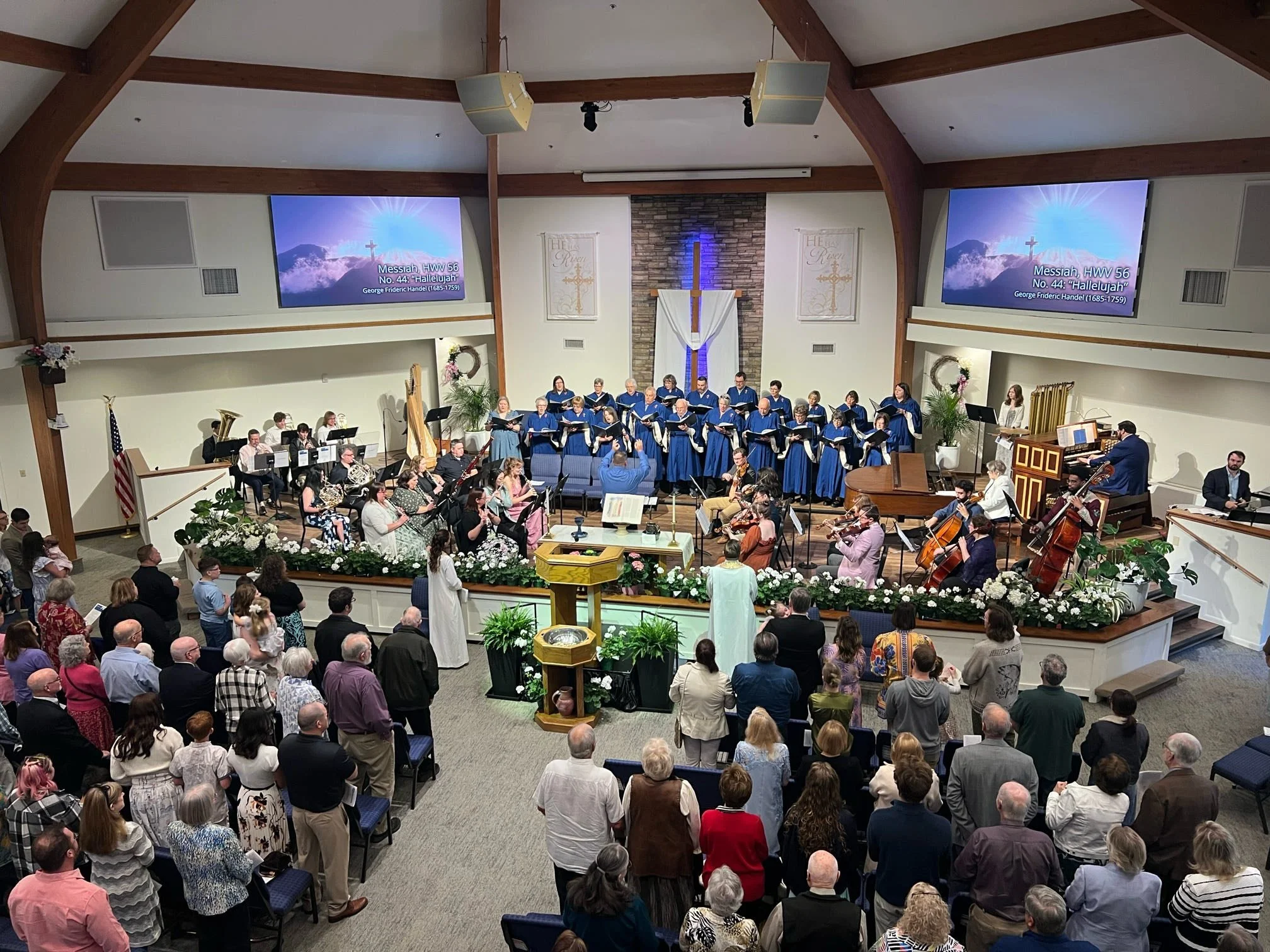
We believe the perfect love of God in Jesus Christ makes a lasting impact.
Building, Renovation, and Finance Team Resource Page
Personal references to people, previous projects, or previous pastors have been removed. Answers not related to the scope of a capital project have been removed.
A feasibility study is a process that helps a church determine whether a potential project is realistic, affordable, and supported by the congregation. It provides information that helps leaders make informed decisions about future ministry and facilities.
Over time, our church has identified opportunities and challenges related to our facilities and ministry space. The feasibility study will help us better understand whether potential improvements or expansion would effectively support our mission and whether the congregation is prepared to support such a project.
Feasibility Study Introduction Video
Building, Renovation, and Finance Team Chair Bob Kaiser and Pastors AW Shahan and Katie Paul share about what a feasibility study is and what it means for our church.
Voiceover: Charles Speer
Two Questions for Response:
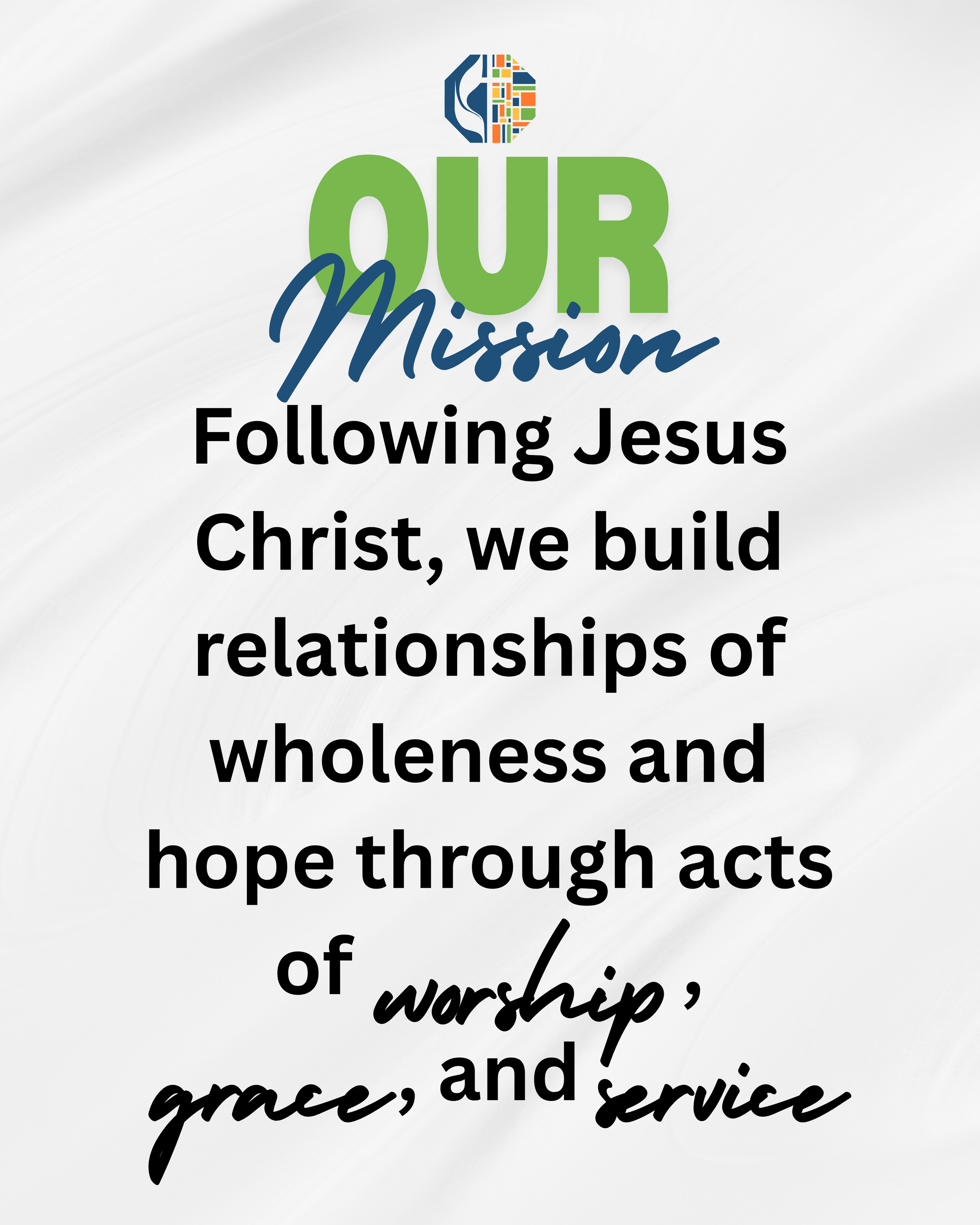
1) Following Jesus Christ, our mission is to build relationships of wholeness and hope through acts of worship, grace, and service. Which parts of this statement are most limited by our current physical space?
2) If our building was a tool for the community around us, who should it be serving six days a week, not just on Sundays?
Submit answers to connect@newhopeokc.org or by using the contact form at the bottom of the page.
Current answers to Question 1 from 89 members of the congregation who submitted responses (limits to our current space):
Worship and Service | All of them | Food ministries | As we grow, each area will need to enlarge to keep up | Donation center is packed | Whiz Kids storage | Storage in general | Visit worship 1st and Sunday School - no visible spot to sit/join in | Capacity! Bigger sanctuary or three services | Worship 1st and others flow from it | Issues with transport hinders service (kids & youth) | Worship - not places to sit, especially together - "no place for me" feel | Grace & service - in part happen beyond the walls | Sunday School - limited by multi-use & for youth - no place to split | All! Sanctuary to small for orchestra (which makes it too loud) plus capacity | Youth is displaced, more room for kids | Rooms for meeting/activities - no good room for meetings, size too small | Donation area | Orchestra is often too loud | Donation room inadequate | Buses are -- need improved suspension | Second Service space | Storage for Boy Scout Troop | We don't have weddings. We may not want them anyway | All three, worship, grace and service, are limited at New Hope. We need larger worship space. We need larger meeting rooms | We need space for fellowship meals | We need storage space for our mission programs | Our children's programs have outgrown their areas | Our youth have not use their room for class for three years | Increase parking in the back and sides of lots | Add a separate wing to church for kids and youth with a multi-purpose room for places, concerts, etc. Add an extra play area | Keep the front grass area available for the neighbors to see activities happening | Prepare to bring Project Transformation back as classroom areas are made available in the summer | New TVs for areas with broken one - room 316 for example | We need it in all areas. So, I am not much help | Worship & Service 2nd Service space | Expand donation space | Music space | Classroom space & storage | Sanctuary space | More classrooms | More storage | Worship I have had people tell me they attend a different church because they came to New Hope and couldn't find a convenient place to sit. So, the entire mission is compromised | Service; specifically, service to our children. The current space for Kids Min is very limited, very outdated, and does not allow for growth. It would be nice to have the baseboards on the wall, not the floor.
Current answers to Question 2 from 89 members of the congregation who submitted responses (who we should be serving all week long):
Children 0-14, summertime, school breaks, before school hours, after school hours | A lot of people | anyone with a current need | what do we have that draws in people off the street? | Men of Hope service requests | religious hurt | a place of support - families need a village | college age kids home | bridge club a community center | intermural sports | groups for foster adoption | family training serving | build for people who aren't here yet | ESL classes | kids, youth, young families (calling cards for reaching others)expand CDO | Project Transformation | who else can we serve because it is a tool for community | shower, laundry ministry; haircuts, nail care12 step groups | mobile meals | Men of Hope - light yard work, windows - & youth | The community! | Scouts - girl scouts? | AA/NA support groups | interest groups (bridge group)senior programs | Scouts Baseball Team = practice or games | Basketball teams - young & old | Exercise groups | Return AA and Alanon meetings | Bus service for local neighborhood kids | Bus service for Baptist Village to our Food Pantry | Larger playground to increase CDO attendance | We used to serve support groups - AA, etc. | Meeting space for outside groups (Non New Hope) - Neighborhood Associations, etc. | Use our field for youth sports practice | People in need of food | Rooms for the community to have rooms to have meeting |And CDO All who need it - managed by staff and leadership | Available for rent to subdivisions and other civic organizations Consider grocery truck for the community | Surrounding neighborhoods, schools | Our neighborhood association meets at New Hope. This is excellent. We might grow in similar areas such as providing space and support for various support groups, Toast Masters etc. Putnam City Baptist does this. There are likely others. | I think that the gym (if it was updated) and the field could be utilized in a better way. There are a lot of I9 & YMCA youth sports programs that need good, safe spaces. With a little love & investments to these areas, we could serve a whole new group of people. | Let Precinct 486 vote here. This precinct covers all of Foxboro and north to I think 122nd between Council & Rockwell. Right now, we vote a mile south of our precinct which is very inconvenient and I think contributes to lots of folks not voting. | Turn the gym into classrooms and storage and build a gym with restrooms on the side with seating so there could be basketball, volleyball and etc. leagues. | More room on stage for the bell and children and pastors.

Important Days, Times, and Events for the Study
Sun 7/19/2026 5:00 pm-6:00 pm
Meet with church office leadership COMPLETED
Mon 7/20/2026 10:00 am-6:00 p.m.
Prepare study organizational materials COMPLETED
Mon 7/20/2026 7:00 p.m. - 8:00 p.m.
Meet with church/project leadership COMPLETED
Mon 7/20/2026 8:00 a.m. - 3:00 p.m.
Prepare study software and materials COMPLETED
7/30/2026
Deadline for initial contacts with candidates for interviews COMPLETED
8/10/2026 - 8/14/2026
Interview appointments set / confirmation emails sent COMPLETED
8/16/2026 12:15 p.m.
All-Church email announcing the start of interviews and announcing the online survey beginning 8/23 COMPLETED
8/18/2026-8/20/2026 7:30 a.m. - 8:00 p.m.
Interviews are Conducted COMPLETED
8/23/2026
Online Survey Begins COMPLETED
8/30/2026
Online Survey Ends COMPLETED
8/31/2026-9/14/2026
Compile/analyze interview and online survey response COMPLETED
9/15/2026-9/18/2026
Written report revised and finalized
Tue 9/22/2026 7:00 p.m.
Presentation of Planning Study Report to Church
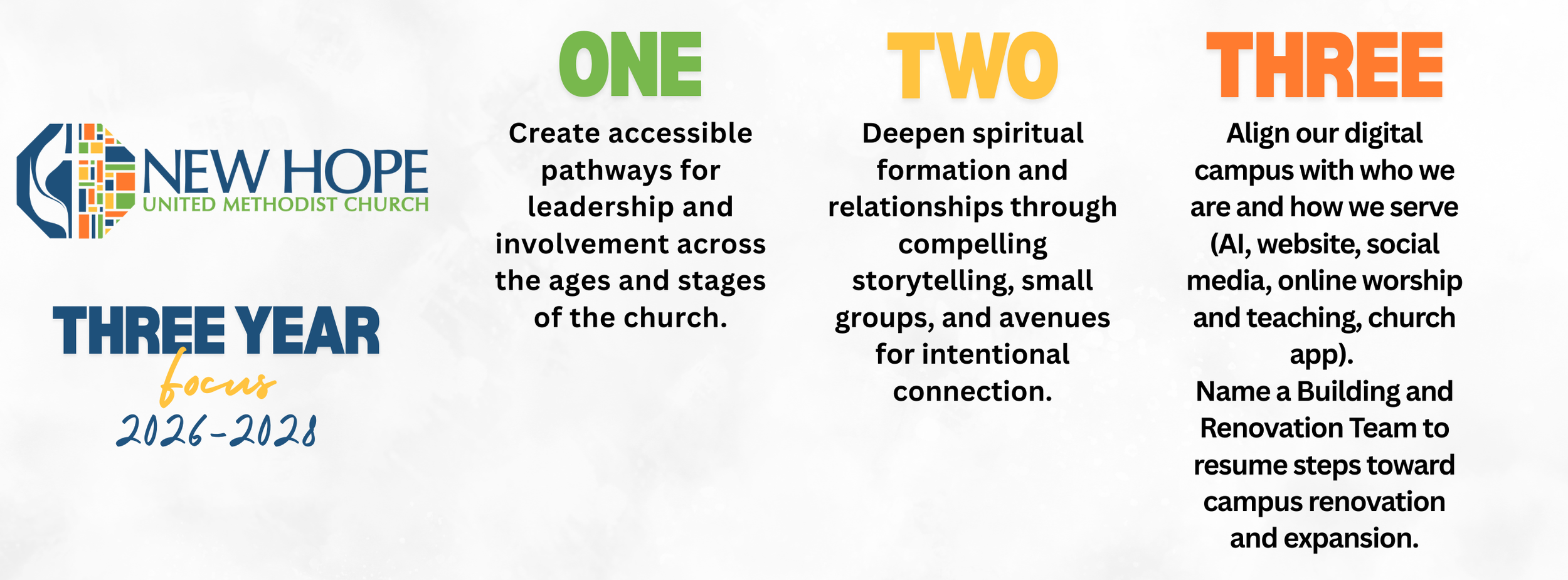
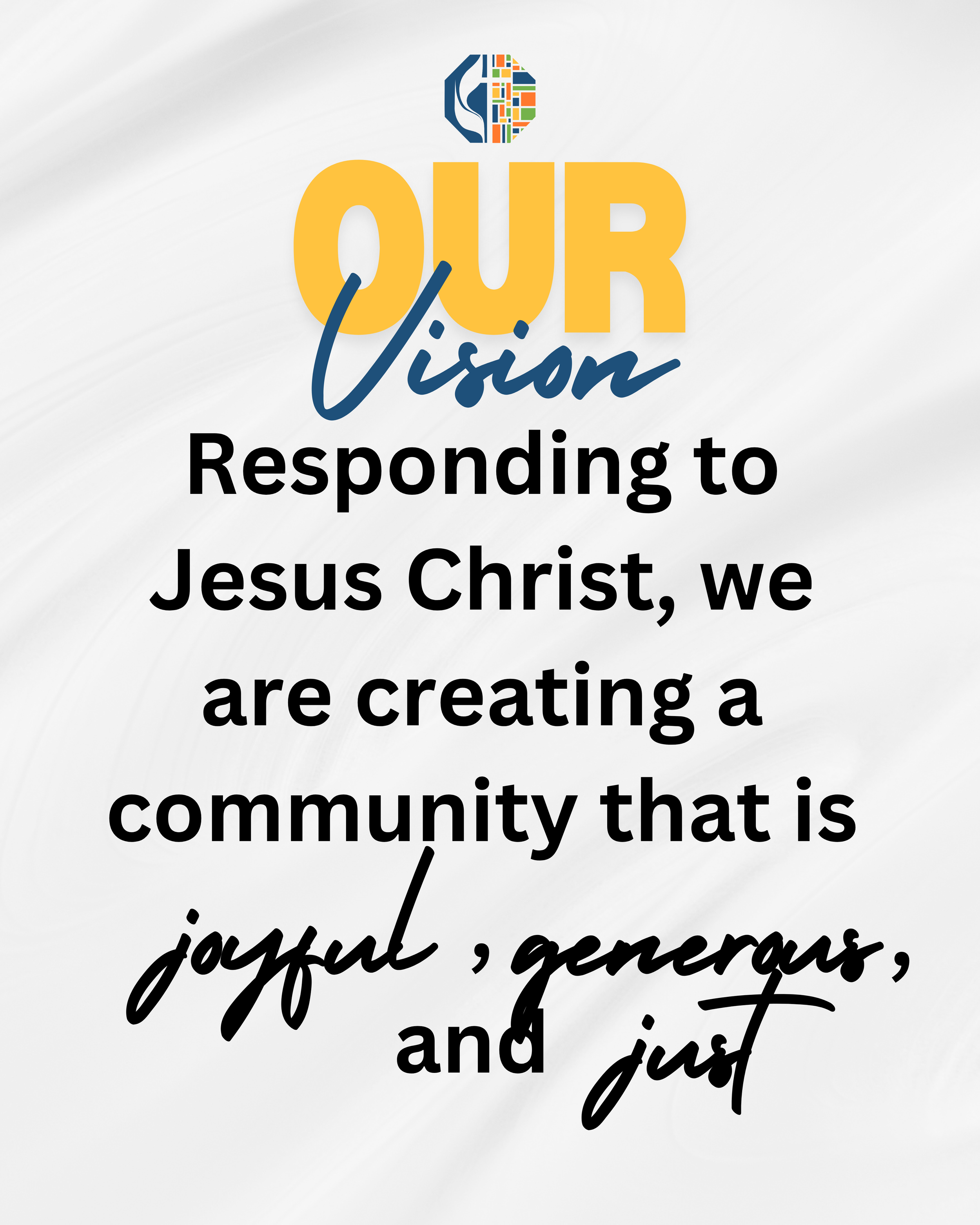
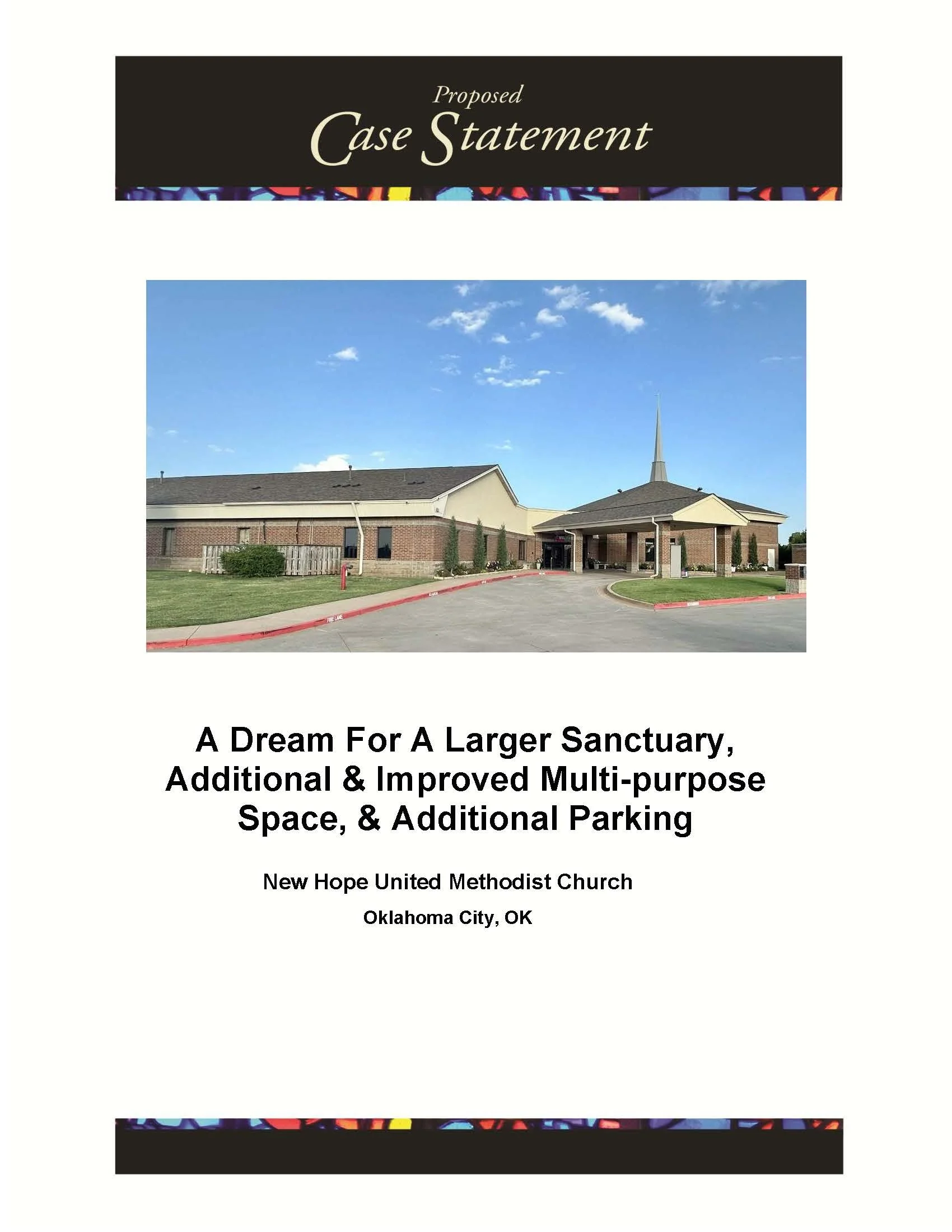
CLICK ON THE BUTTON OR THE IMAGE BELOW TO READ THE PRELIMINARY CASE STATEMENT AS WE DREAM ABOUT THE POSSIBILITY OF A LARGER WORSHIP SPACE, IMPROVED MULTI-PURPOSE SPACE, AND ADDITIONAL PARKING
Resources
The BRF Team
The BRF Team was established by the Charge Conference and elected by the Church Council to guide the work of Area Three of the Strategic Focus.
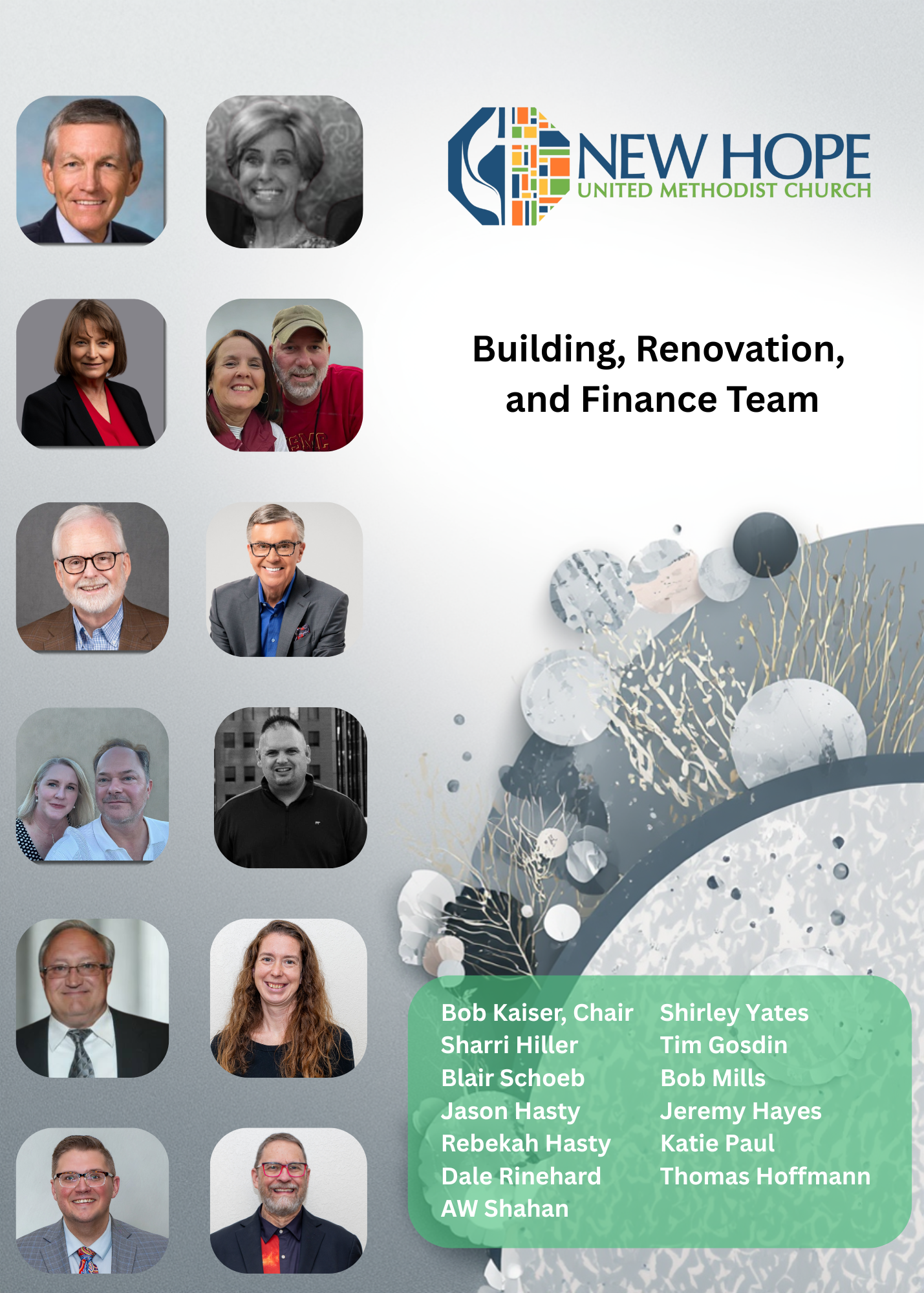
New members by virtue of office:
Don Harris, Finance Chair 2026-2028
Stacey Gaylord, Business Administrator
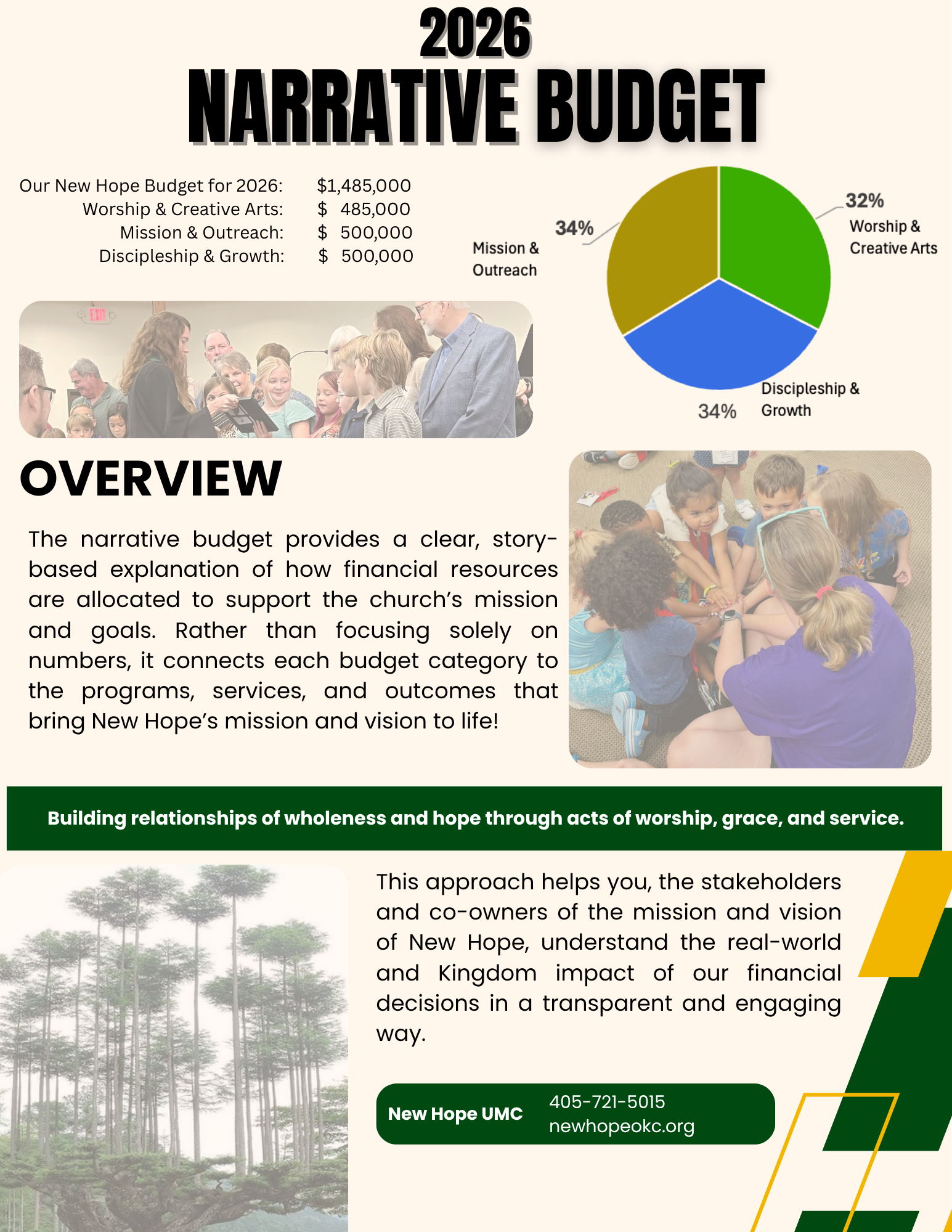
The 2025 Impact Report and the 2026 Narrative Budget
See how your prayers, presence, gifts, service, and witness made a Christian difference. Click the images to open the impact report and the narrative budget.
Attendance Increases Over Time
We are an Intergenerational Church
Late Services Below 200 in Onsite Attendance (available seating: 214)
Baptisms and New Members in the Last Five Years
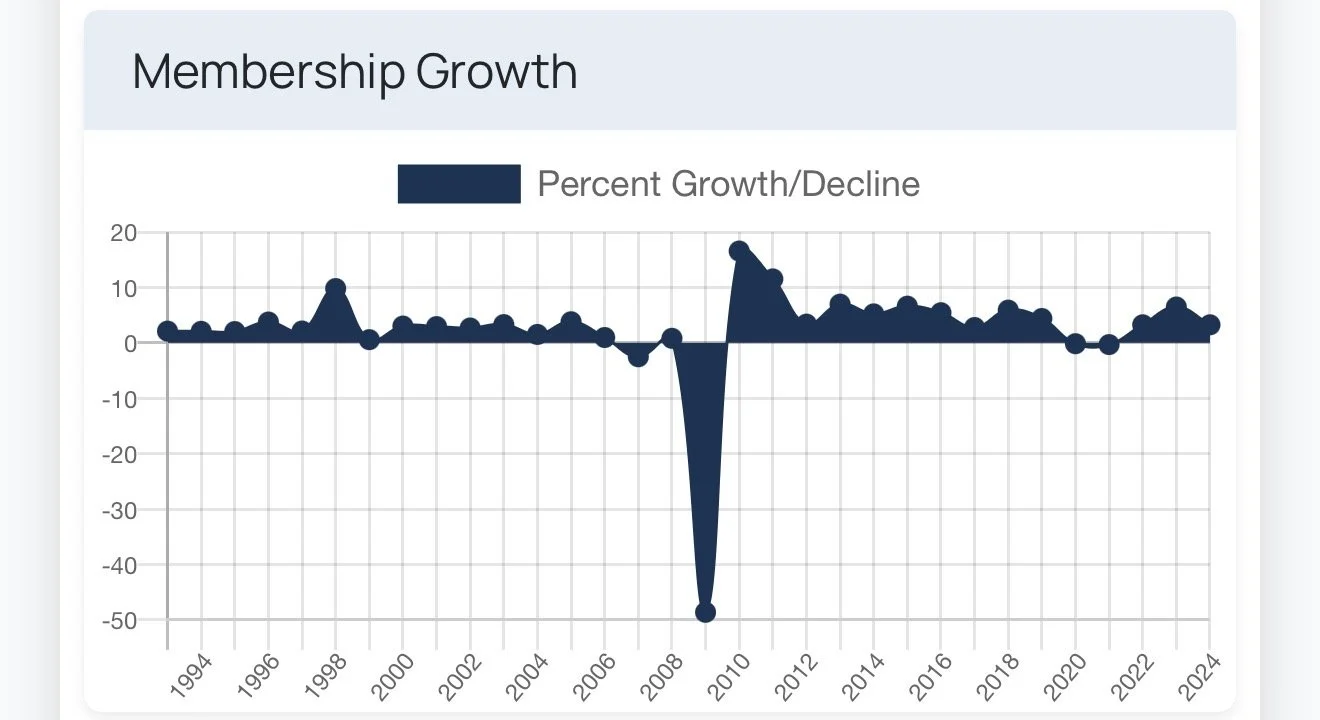
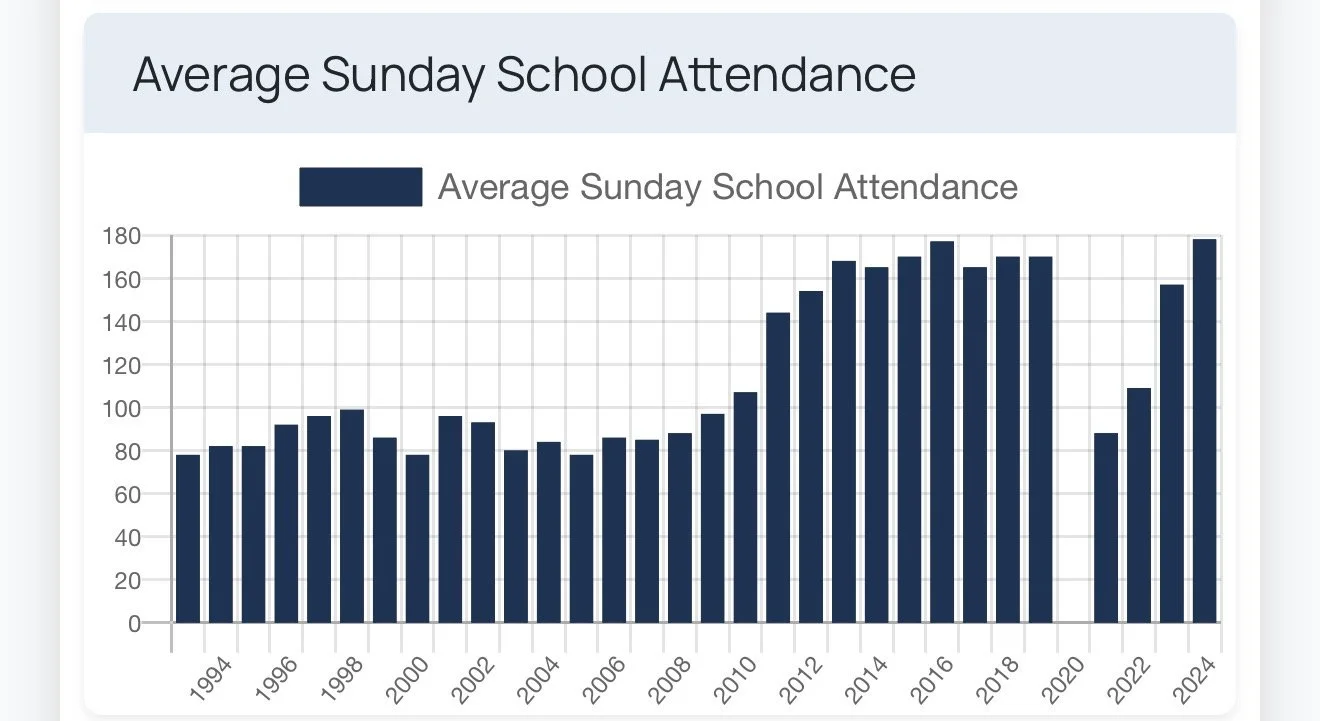
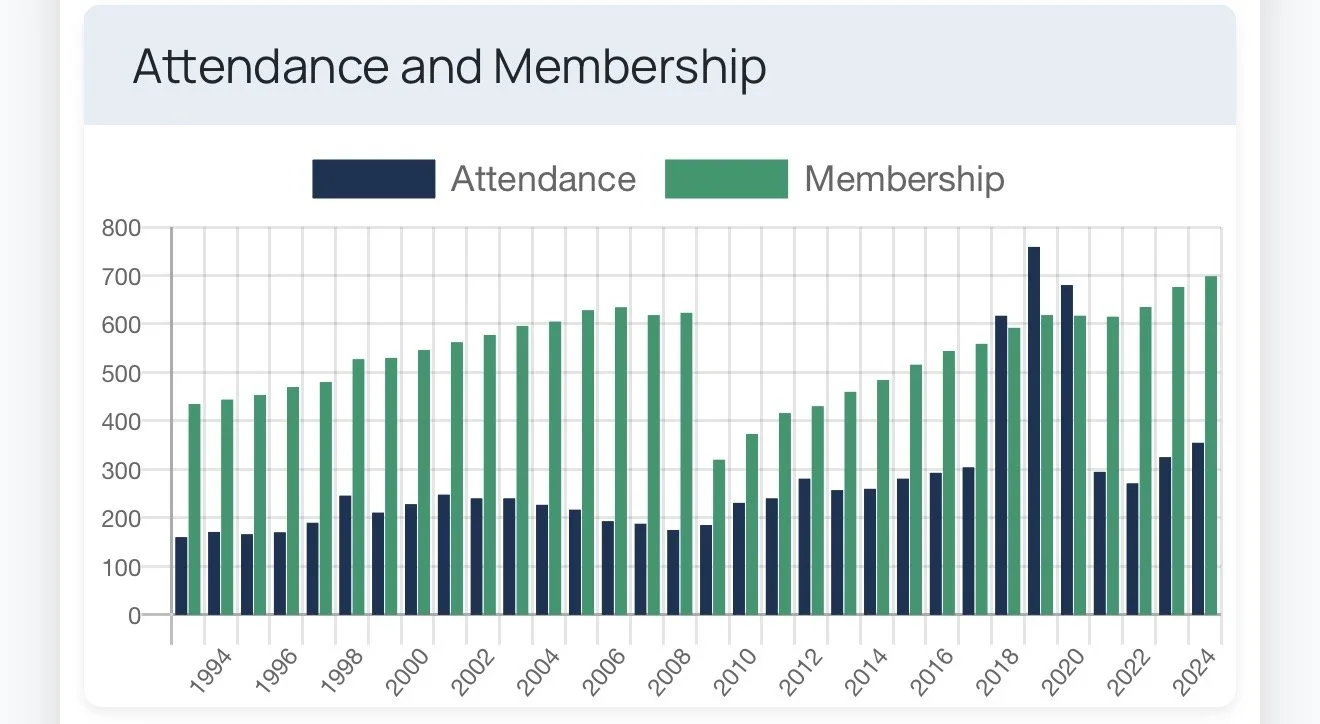
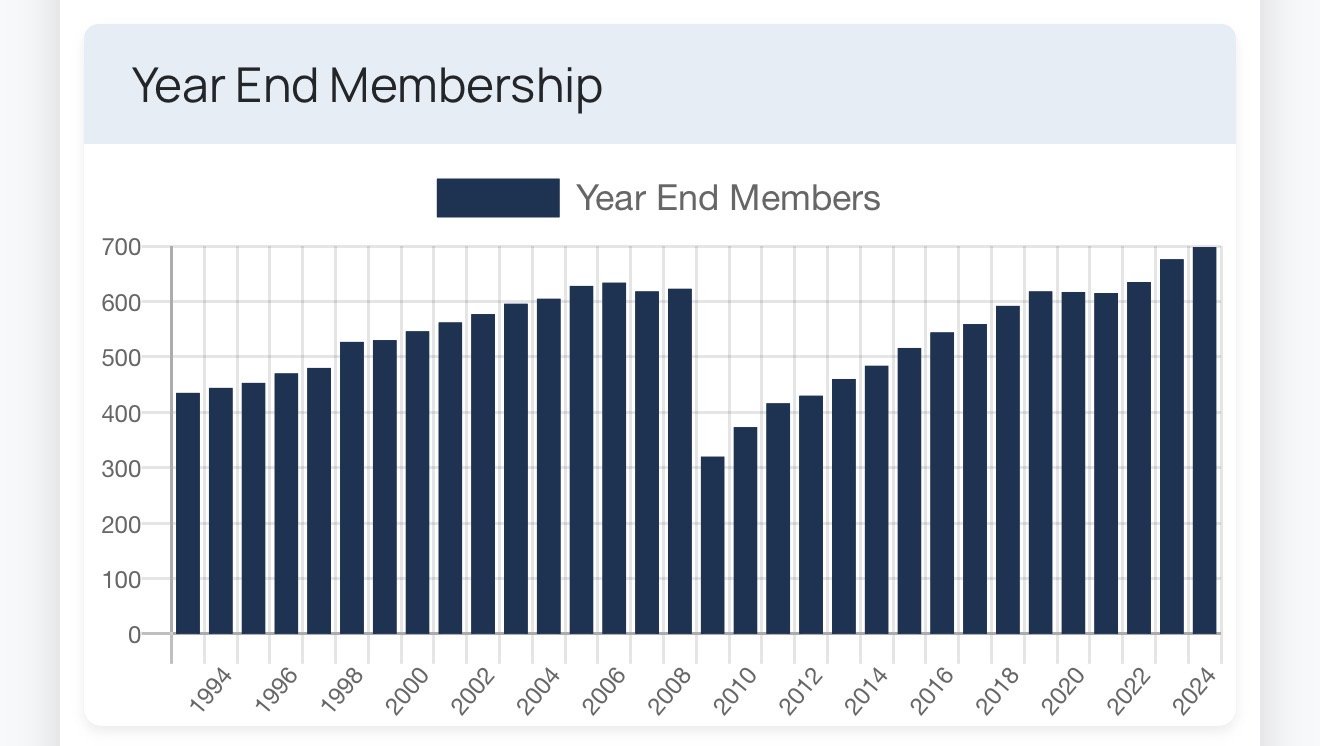
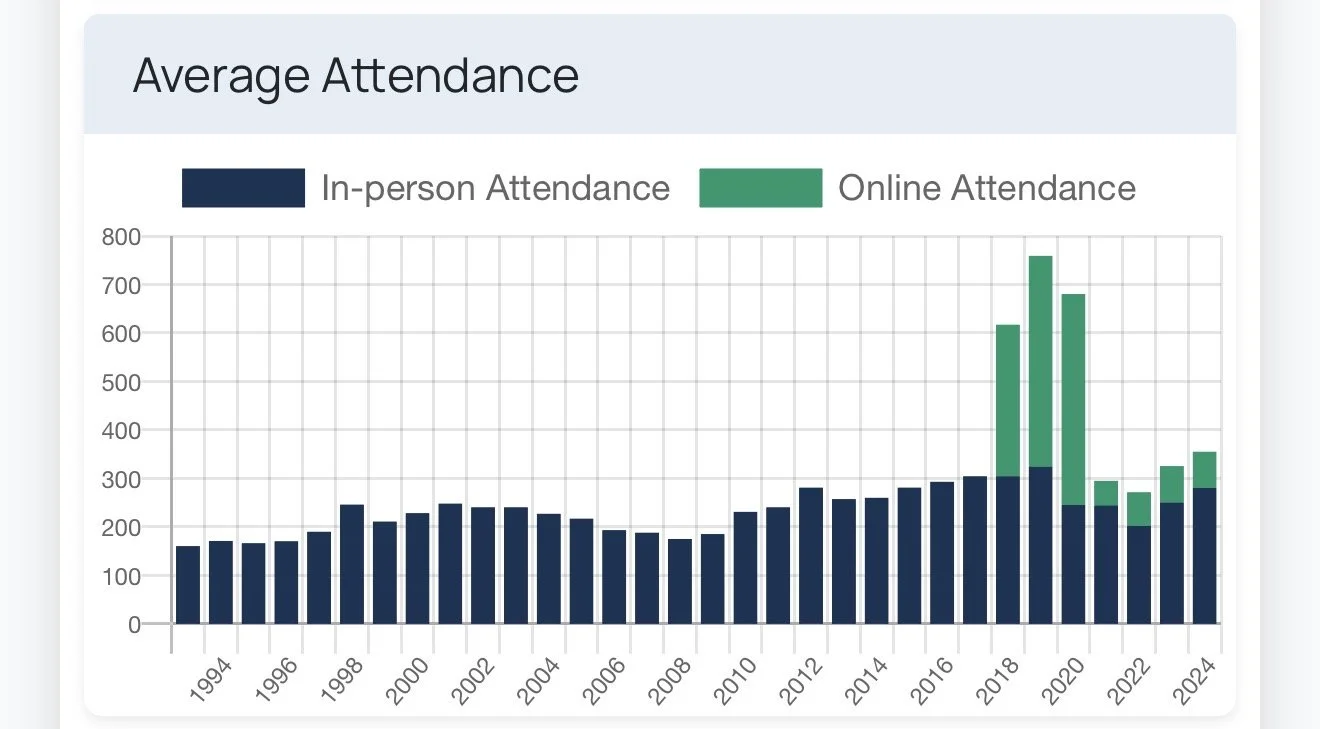
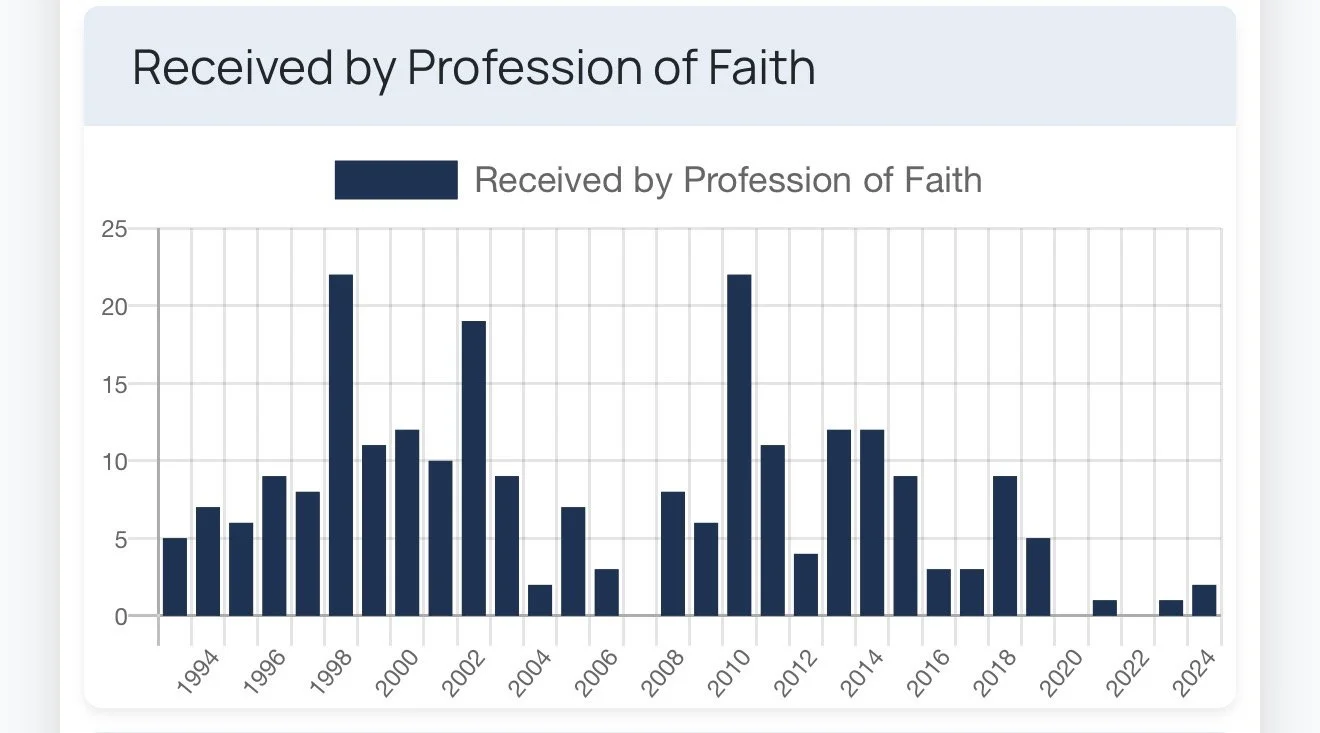
We have a large mission field, are currently reaching 0.26% of those in a 5-mile radius of our church, and have substantial capacity for growth if barriers to participation are removed. Those barriers are not just physical, but also spiritual and emotional.
For New Hope United Methodist Church, given our current average attendance of around 351 and our location in a rapidly growing northwest Oklahoma City corridor, we must consider future mission field growth. If the population within five miles of our church grows from roughly 135,000 to 150,000-160,000 over the next decade, then maintaining even the same percentage rate as we currently have (351 of 135,000 or 0.26% to 420 of 160,000) would require additional attendance capacity, staffing, parking, and ministry space. We believe that we will exceed this growth pattern over the next decade.
FAQs
What is a feasibility study?
A feasibility study is a process that helps a church determine whether a potential project is realistic, affordable, and supported by the congregation. It provides information that helps leaders make informed decisions about future ministry and facilities.
Why are we conducting a feasibility study?
Over time, our church has identified opportunities and challenges related to our facilities and ministry space. The feasibility study will help us better understand whether potential improvements or expansion would effectively support our mission and whether the congregation is prepared to support such a project.
Has the church already decided to move forward with a building project?
No. A feasibility study is part of the discernment process. No final decisions have been made regarding construction, renovation, fundraising, or financing. The purpose of the study is to gather information before those decisions are considered.
What will the feasibility study tell us?
The study will help us understand:
The congregation's level of support for potential projects.
Questions and concerns members may have.
The church's capacity for a future capital campaign.
Areas where plans may need to be adjusted or refined.
Whether proposed projects align with our mission and ministry priorities.
Who is conducting the study?
The study is being conducted by experienced church stewardship and fundraising consultants at Walsh & Associates who work with congregations to assess readiness, gather feedback, and provide recommendations.
How can I participate?
Members and friends of the church may be invited to participate through interviews, surveys, small-group conversations, or other feedback opportunities. We encourage everyone to share their thoughts openly and honestly.
Will the results be shared with the congregation?
Yes. Once the study is completed and reviewed by church leadership, a summary of the findings will be shared with the congregation.
What happens after the study is completed?
Church leadership will review the findings and recommendations. Those findings will help determine next steps, which could include refining plans, conducting additional study, moving toward a capital campaign, or choosing not to proceed with a project at this time.
What if the study shows that the congregation is not ready?
That information would be valuable. The purpose of a feasibility study is to provide honest feedback. If the study identifies concerns or limitations, leadership can address those issues before considering any future steps
Why are we exploring facility improvements or expansion?
Our facilities exist to support ministry. As we look toward the future, we want to ensure our spaces continue to help us worship, build relationships, serve our community, and welcome new people into the life of the church. As we watch the present, some aspects of our physical layout present limitations to our current size and activity level.
How would this project support our mission?
Any project we consider must serve our mission of following Jesus Christ and building relationships of wholeness and hope through worship, grace, and service. The goal is not simply to improve buildings, but to strengthen ministry opportunities for current and future generations.
Are renovations being considered as well as new construction?
Yes. The feasibility process allows us to explore a range of possibilities and determine which approaches best address the church's needs and priorities.
Has a final design been selected?
No. Any concepts currently being discussed are preliminary and intended to help generate conversation and feedback
How much might a project cost?
Cost estimates are still being evaluated. One purpose of the feasibility study is to determine what level of investment may be realistic and sustainable for the congregation.
Will the church need to borrow money?
No decisions have been made regarding financing. Any future recommendations involving borrowing would be carefully evaluated and communicated before decisions are made.
Will giving to missions and ministry be reduced?
Our commitment to worship, discipleship, missions, and community ministry remains central to who we are. Any future project would be evaluated with those priorities in mind.
Will everyone be expected to contribute?
Participation in any future capital campaign would be voluntary. Members would be invited to prayerfully consider how they might support the church's vision according to their own circumstances and ability.
What happens if fundraising goals are not met?
Church leadership would carefully evaluate options before moving forward with any project. The feasibility study itself is designed to help assess what level of support may be realistic before commitments are made
Who will make decisions about future projects?
Various leadership groups, including the Church Council and other designated teams, will review information and recommendations. Any decisions requiring congregational approval would follow the procedures outlined in the Book of Discipline and the church's governing policies.
Will the congregation have a voice in the process?
Yes. Congregational input is one of the primary reasons for conducting a feasibility study. The feedback gathered during this process will help inform future decisions.
What can I do right now?
Pray for the church's leaders and for wisdom throughout the discernment process. Participate in opportunities for feedback, ask questions, and stay informed as information is shared.
Is this about building a bigger church?
Our goal is not simply to build a larger facility. Our goal is to create spaces that help us fulfill our mission more effectively. The question is not how much building we can afford, but how our facilities can best support the ministry God is calling us to do in the years ahead.